BANNER CREDITS: RITUPARNA CHATTERJEE
A woman with the potential to make it big. It is not that she cannot: she simply will not.
PHOTO CREDITS: ANIESHA BRAHMA
The closest anyone has come to being an adopted daughter.
Showing posts with label Fauna. Show all posts

Tuesday, January 7, 2014

Cat

Winter nights are super-cool. Literally.

Being a very summer person I seldom care for a weather that involves layers of woollens. Trust me, it's close to snowing this year in Kolkata. I know it shows 13°C on the news channels, but that is obviously to stop people from panicking. Remember how they played music when Titanic was sinking?

Tonight, of course, is different. I was taking a stroll on the balcony and talking to a friend on my Nokia E63 (which, as we all know, is the greatest cellular telephone model ever invented. In fact, it was so great that they only sold a limited edition before Risto Siilasmaa had decided to call production a halt).

The conversation ended in the vaguest possible way, making me stare into the sinister darkness of the night sky. Kolkata usually looks extremely pretty when the internet is down, but tonight I could appreciate her though Om-Dar-Ba-Dar (don’t ask!) was being downloaded at a breakneck speed on my laptop.

Then I noticed the cat.

Note how I have itialicised the word ‘the’ in the paragraph above. I guess it would have been a better idea to do away with the italics completely and use a capital C for cat. This means that “the cat” will be replaced by “Cat” throughout the rest of this post. If I use a small c it would imply that I am talking of another cat. If the word appears at the beginning of a sentence use your own judgement.

Cat has been irritating me for the past few days, and that is an understatement. I usually do not mind if Cat turns up in unlocked rooms and darts past me when I enter. I’m not sure who owns Cat, but I guess Cat thinks it owns our place and is quite confident about it.

I do, however, mind when the black-and-white pest (this is not a zebra or a panda that I’m talking about) thinks 2.45 AM is the perfect time to rehearse something in impeccable feline. You can almost set the clock by its accurate sense of timing.

But why 2.45 AM? Why this specific unearthly hour, night after night? Mind you, this was not the usual meow or purr: this was a kind of frantic mating call – only without a mate. The call was really too hideous to be classified as a mating call: it can arouse a set of fingernails working on a blackboard, but that was about it.

I had once struck upon the theory that Cat works in the cat community as a manual (do cats use the word ‘manual’?) alarm clock. I have often left my desk to watch Cat intently, only to find him go on cawing nonchalantly, completely ignoring me.

Slowly but steadily I realised it was out to settle some kind of personal vendetta against me. I was reminded of Birds: I probed into my past, looking for any anti-feline activity that might have triggered the feelings but could not find any.

Finally I was convinced that I was not the guilty party: Cat was. It was one of those cat-demons that you should have come across in fairytales but never have – for the simple reason that these little menaces had bullied Andersen and The Brothers Grimm into writing otherwise.

Cats have nine lives, I have read. Cat cannot be an exception. Cat is, after all, a cat. I have one. 1:8 definitely sounded better than 1:9 from my point of view.

I had noticed Cat from above. It was on an asbestos terrace of sorts; I was on the balcony above. It was an easy victim: all I needed to do was just go to the bathroom, fill a mug with ice-cold water, and empty the entire thing on the demon. Of course, emptying an entire bucket would have been a better idea, but I wasn’t really sure whether the asbestos terrace would be able to withstand the weight of the water.

Then I noticed something: Cat seemed to be out on a mission. It leapt on the wall separating our house from the neighbours; then, for whatever reason, it started to walk on the wall (taking breaks for barriers) and circumscribed the entire house to came back to rest on the asbestos terrace just below where I was standing.

Why would any creature do something like that? Bothering the demon with water can wait, but what nuisance is this? Even if it was working as a spy, who was its recruiter? How was circumnavigation going to help the recruiter? And what was the fixation with asbestos?

I took out my E63 and Googled with asbestos + cat. Overexposure to asbestos apparently leads to cats being infected by mesothelioma, which is actually a rare kind of lung cancer that is triggered by, well, overexposure to asbestos.

Now I started to get a bit concerned about Cat: should I actually scare it off the asbestos by emptying a container of freezing water on it? On the other hand, what if the sudden encounter with water went on to leave a deep, incurable psychological scar on Cat?

While all these were going through my mind, Cat started its regulation stroll – only in the exact opposite direction: this time he was going anticlockwise. He took the exact opposite route along the wall and eventually came back and ended up on the asbestos terrace.

Then Cat started clockwise; then anticlockwise; clockwise again; back to anticlockwise; this way; that way; asbestos terrace; otherwise; at the same pace; never missing a single step on the entire route; never putting a foot out of line; just going on and on and on.

I took out my E63. 2.40 AM, it said. Do I check Facebook quickly to find out how many Likes my new witty update had received? Or should I resist and patiently wait for Cat to shriek in five more minutes? What should I do?

Curiosity didn’t really kill me, but it did me hooked. This has to be the last round, I told myself. Cat has to end up on the asbestos terrace once it was through with this round.

Cat did not turn up.

2.41. Still no sign of Cat.

2.42. Nope.

Where has the bugger disappeared?

Still no Cat. I leaned over the cornice to have a better look. Then I remembered that my E63 was equipped with a flashlight – and saw something moving very, very vaguely on the asbestos.

I leaned further. It did not help.

I went on my toes to have a closer look.

Time had come for drastic action.

I pulled a chair next to the cornice and leaned over; I knew that I was about to take a serious risk, but it was probably worth it.

I leaned further; and further; and further; till...

The last thing I heard before the fall was the sound of my door opening.

This is funny. It did not hurt.

Of course, I had landed on my limbs: all four of them. So it wasn’t supposed to hurt, I suppose.

Something is different, though.

something major has changed and i cannot fathom what

now that i have arrived on this gray thing after the usual fifty rounds of this brick house at the same time just to give creeps to the hehuman inside the room i can see him coming out of the room only that he is looking at me in a confused state it seems that he is not carrying any fish or milk or anything yummy even today but still i get a kick out of giving him the creeps look at the moron he was perhaps sitting in front of that black toy and making that khat khat sound with his fingers humans are kind of funny in that way they sleep at night but this hehuman stays up but doesnt look for shehumans or fish or milk or mice but does this khat khat i think he may be mad but he looks all normal i wish he would call me inside this night is after all very cold but the hehuman is too selfish i will throw dead mice on him some day

Monday, December 9, 2013

Animal Antics

KE Priyamvada was a BBC Mastermind India winner in 2000. KE Priyamvada is also an author these days.

I had picked up Animal Antics with some scepticism. What can I learn from a children's book on wildlife that I am already not aware of?

The poems caught my eye even before I reached the Contents section: the first was a dedication; the second, a small summary of the contents of the book. Both in poems. This might be good, I thought, as I flipped through the pages.

Animal Antics is, in short, a beautiful book. There are 26 chapters, one for each letter of the alphabet, dedicated to an animal whose name begins with that letter. There is also a bonus chapter at the end, dedicated to the planet we love and are hell-bent to destroy using various methods. If this doesn't sound cool enough for you, let me add: in addition to the excellent illustrations the entire book is written in verse.

If that doesn't catch a child's attention I have no idea what will. This is a Mastermind winner at work, so be rest assured that there will be all sorts of intriguing facts. To add to the fun there are two more sections in each chapter: the first provides a concise idea about the animal; the second, called Tidbits, asks you simple questions.*

* I guess I should be ashamed, but I must admit that I couldn't get several of them; do not be worried; the appendix of the book has all the answers.

In short, this is the kind of book that is bought for children but may end up being read by the parents instead, so buying two copies is perhaps a better idea. Nobody, after all, wants a domestic tussle.

***

PS: If you've rued not having known the name of an animal whose name starts with a Q or an X during one of those Name-Place-Animal-Thing contests, this is your chance.

Wednesday, March 27, 2013

Ritanjan's tale

This is a true story.

This is as true as the greatest story ever untold - the one that resides peacefully in Manmohan Singh's heart.

This is a story about Ritanjan. It also involves a lot of animals, but we will come to that later.

Ritanjan is a PhD in Development Studies (don't ask!) from the London School of Economics, which probably means that his level of enlightenment is on a different plane than mine. It also almost certainly means that he lives in England, which he does.

However, his academic pursuits are not the only aspects of life that sets Ritanjan apart from lesser mortals like us. He loves walking on trails, which is a passion as obscure to me as eating Rubik's cubes is; more so, since the guy had been a student of Patha Bhavan (without any doubt the greatest school the world has ever seen), and is an ardent follower of cricket (and a passionate player as well, taking leagues by the storm all over England).

So, off they went, the two of them, Ritanjan and his backpack. It was a rare sunny day in England (well, I assume it was a sunny day, since it makes a good story). They took the South Downs Way, one of the largest national trails in England (with Ritanjan everything is kingsize; that's the kind of person he is - had he been in India, Gold Flake would probably have made him their brand ambassador).

Of course, he wasn't walking the whole trail. He started off from a small town called Petersfield, and walked the rest of the trail. He walked and walked, and then walked some more (that's all you do when you go on trails: it's Ritanjan's idea of fun; London School of Economics PhDs belong to a different planet altogether).

He walked upto a village called Buriton. Note the way he went in a direction exact opposite that of human civilisation - London, Petersfield, and then Buriton. Given a chance he would probably have been living in a cave by now.

(For a vivid, very detailed description of the route from Petersfield to Buriton, click here.)

***

So far, so good. Our hero eventually went out on the much-awaited trail - that would take him from Buriton to further west - towards Winchester. Of course, it's not exactly obvious for people in the Western World to go further west, but that's another story. We won't deviate.

Ritanjan, immersed in the mesmerisingly picturesque mystique of the English countryside, soon came across a field. It looked like a rather nonchalant stretch of greenery, surrounded by ominous-looking fences across its perimeter. Inside the field were about eighty cows, grazing on the fresh grass in the same leisurely manner that cows have done in the history of cattlekind.

There may have been a few oxen among the lot, though, but Ritanjan wasn't one to stoop low enough (literally) to classify the cattle by gender. He is destined for greater things.

Anyway, he knew that the field was a shortcut to his destination, and decided to leave his footmarks on the expanse of lush greenery. He walked and he walked, for that is what people are supposed to do on this mysterious hobby that goes by the name of 'walking trails'.

***

Now, Ritanjan, despite his academic conquests, is a rather simple person at heart. As his trekking shoes made their way across the uninterrupted greenery, he did not notice that about half a dozen cows had distanced themselves from him, and were slowly forming a semicircle around him.

It took him some time to realise that there was something wrong. Cattle weren't supposed to go on a semicircular formation around human beings. Being an extremely intelligent and educated person, he also realised that there could be only one reason for them to act in such a non-bovine fashion.

Being the athletic person that he is, he turned around, and ran back as fast as he could towards the fence. He could hear the tale-tell sound of twenty-four or so hoofs thundering on the soft earth behind him and closing on to him as he managed to jump the fence just in the nick of time.

He decided to give it another shot. Mustering as much stealth as a PhD can under these circumstances, he crossed the fence yet again, possibly with the unrealistic hope of making a dash for it and reaching his destination.

Much to his dismay, the entire barricade of eighty-odd cows, now arranged in a neat, linear formation, took this attempt rather personally, and sped towards Ritanjan, as if marshalled by some invisible CowLord. He was ready this time, and turning a full one-hundred-and-eighty-degrees, he made it to the fence, this time rather comfortably, and panted on the other side of it, utterly defeated.

To his credit, Ritanjan acted like a true hero, and did not panic. Once he got over the initial shock, he did something that brought out the macho image of the man more than anything else: he made frantic calls to his friends, one by one, asking them the same question - predictable, given his situation, but a first for his hapless friends - "do you know how to dissuade, distract, or dissipate a battalion of cows?"

Unfortunately, none of them could come to his help. Meanwhile, the cows had retreated by a few yards; on the other hand, the eighty-odd cows had moved closer to the fence to have a closer look at this seemingly harmless alien.


***

What next? Ritanjan had to cross the field in order to pursue his trail (which, as we have mentioned before, held a larger-than-life significance to him). There was another route somewhere, but it was probably a convoluted, lengthy, and obscure one - and there was no assurance that there won't be any cattle on the alternative route.

He sat, confused, worn out, and devastated. He was soon overcome by hunger, thirst, and the sheer frustration of not being able to go on with the trail - the thing that meant possibly the world to him. These were not your typical rickety Indian cows. The Jersey Cows were larger, stronger, meaner, and looked like they meant business.

He waited for what felt like hours. Though it was rather early in the morning, he was so exhausted that it seemed that it was closed to sunset. He had forgotten, it seems, that The Sun never sets in the proud British Empire.

And then, along came a man, with the two creatures that made him a bonafide British - his wife and a dog. The dog was small one, possibly a chihuahua. Chihuahuas, as we all know, are possibly the most overhyped creatures in the world - even more than Amish Tripathi and Aishwariya Rai put together.

The man, possibly more British than a steaming cup of Earl Grey, asked Ritanjan the same question they often used to ask leading men in Bengali movies of the 1960s: "any problem, young man?"

Ritanjan, hoping to clutch on to the family of three in the same way that a Tata Docomo user does to the minuscule indication of the availability of a tower, poured out the details of his exasperation to the threesome.

The man nodded with a stiff upper lip.

The woman was surprised, and exclaimed "but cows are the most peaceful animals!"

The chihuahua kept quiet. Chihuahuas typically keep quiet during important discussions.

Ritanjan responded "till about half an hour ago I'd have agreed with you heart and soul". It was clearly evident that he had regained some of his composure, and had eventually got a grip on the time elapsed.

The couple assured Ritanjan, and offered to walk him across the field. The chihuahua, as before, kept silent, sticking to the policy chihuahuas have stuck to over centuries. Ritanjan accepted their brave offer somewhat reluctantly, the skepticism evident in his voice.

***

So off they went, the four of them. The very British man, his very British wife, the very bright scholar, and the very useless dog. Together they dared to challenge what few groups of four have been brave enough to do in the history of the third planet in the Solar System - take on a gang of eighty cows.

The grass, lush with the anticipation of an unmatched, gory confrontation, greeted them with the aroma of now-fading dew. The cows, watching them in rapt attention, formed a file yet again. Their intention was clear.

Ritanjan's throat dried. He tried to speak, but not a single word left his parched throat. The Briton and his wife didn't utter a word either.

But the chihuahua did. It barked. Twice.

There was silence. An absolute, numbing, pregnant silence. There would have been an audible sound even if a pin had been dropped. Unfortunately, Ritanjan does not rate pins too highly, and doesn't consider them a necessity while go on that grand hobby of his - which goes by the name of trail-walking.

They stood pinned to the spot, though.

And then, the unthinkable happened. The cows, petrified by the chihuahua's atrocious wails, retreated, keeping a safe distance from the Gang of Four. The foursome passed away, completely untouched of the awestruck herd that didn't dare to come any closer.

***

There is a small postscript, though. On reaching to the safe abode at the other end of the field, the woman told Ritanjan "This is how you tackle cows. They're rather meek creatures. I don't blame you, though - I'm sure you don't come from a country where you've seen a lot of cows."

***

PS: Other than the man himself, I guess I should acknowledge Bimbabati - the pocket-sized amazing talent who simply refuses to write - who was the first to narrate the story to me. Ritanjan, of course, helped me with the detailed information.

I could not find the man, his wife, their dog, or any of the cows for more details.

Wednesday, September 8, 2010

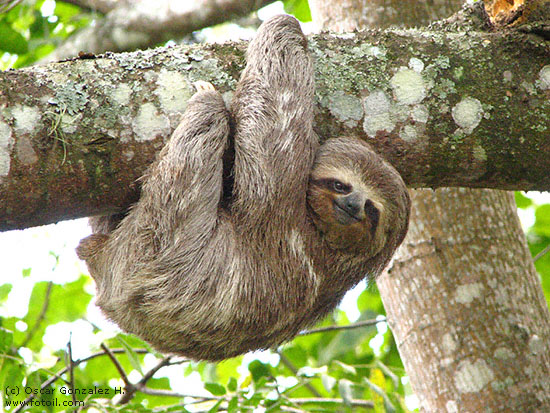
Sloths

The inexplicable position
I've always found sloths quite intriguing. Yes, my laziness has played a significant part towards my bias, but there's something else to it as well. Sloths mostly eat leaves and tender shoots, and hence you almost always find them on trees. That's fine.

But why do they cling on to the trees this way? Why would anyone cling on to the branch in such a way that if somehow a few fingers give way, they'd fall with a crash? Has it never occurred to them that staying above the branch is a lot easier? Would it not make sense to remain that way? Does this pose seem easy at all? I mean, why don't they just have a look at the rest of the animal kingdom and try to be on all fours like the others?

The (artificially created) Utopian position
What stops them, I wonder. Are they so kind to the tree that they're even willing to risk falling down at a moment's lapse, to avoid exerting pressure of any kind on the branches? Or are they foolish, as plain and simple as that?

I wish they were smart enough to get the picture rotated by 180 degrees. Or ruthless enough, maybe.

Wednesday, August 25, 2010

Serious stuff

A mighty impressive country, this. They do not tolerate any kind of filth over here. You won't find a speck of dust anywhere over here. They don't even like insects that prefer filth. Take cockroaches, for example: they don't like cockroaches. There's nothing wrong with that - most people do not like them (barring, possibly, our friends from the Far East, who absolutely love them on a platter). But the Americans have taken things to a different level altogether here. They not only eradicate them, they have planned to eliminate it altogether; and this vindictiveness is so extreme that they have probably taken it as a mission to neuter it; and this neutering business is so vociferous that they've shortened the name, and call it a roach.

When they mean business, they do whatever it takes.

Saturday, July 10, 2010

Venus Flytrap

The first Ray book I can recall reading was Aro Ek Dojon (Yet Another Dozen). It started with the spine-chilling Septopuser Khide, which was followed by the even more intimidating Fritz, and later in the book, Khogom. Thought the sharp end of Fritz gave me the maximum goosebumps Khogom was the most macabre, Septopuser Khide was definitely the one that got stuck into my memory the most.

When I grew up I Googled the word septopus, and (as expected) didn't find a relevant result (though I came up with cartoons of octopi with a missing limb). However, the other plants mentioned in the book were possibly real, I thought. So I tried Nepenthes.

It was real.

And then, while browsing through its Wikipedia page, I came across the curiously named Venus flytrap.

It goes by the name Dionaea muscipula, and is found in the Carolinas (no, I wasn't privileged with a glimpse in my five trips) in locations with a low nitrogen content in the air.

But what I found most intriguing was the name. It's decent-looking, but Venus? Was it that attractive? That sensuous? I wonder...

More importantly, it was capable to consume decent-sized insects, even large spiders, so why name it after one of the smaller insects it manages to trap? Mind you, the very small creatures are allowed to escape through the pores, since the effort spent in digestion is not worth the prey. Then why a flytrap?

Then it struck me. Fly isn't necessarily a noun here - it's a verb. It stops the flight of unsuspecting creatures and captivates them into a reduced lifetime of misery. They poor creature doesn't have an option but to face death approach as a sluggish, ruthless, unavoidable demise. It tries its best to escape, but there's no way out - it just faces its end, just like that. I suppose it lets out ultrasonic shrieks that don't escape the walls of its prison - shrieks in vain - shrieks that drown into anonymity after choking existence...

Wednesday, April 28, 2010

The Seaside Pebble Man

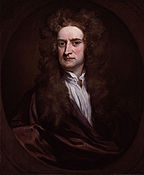
Sir Isaac Newton, as we all know, was a remarkable person. Not only did he write the Philosophiæ Naturalis Principia Mathematica (which nobody I know has read), discover cool stuff like gravity and laws of motion, and, more importantly, invent his famous catflap, but he was also responsible for one of the most intriguing quotes I've ever heard. The story goes like this:

Newton had a dog, presumably a black one. It was called Diamond (for some reason this reminds me of Black Diamond Express). Diamond, irrespective of his whatever his virtues were, overturned a lamp (or a candle, or something equivalent) to set fire to Newton's research papers, which had taken twenty years to accumulate (and that was because they were complicated ones, not because our hero was a slow candidate). Not exactly what you classify under loyalty, but then, that's how sometimes our canine friends can behave like. Newton, the great man that he was, didn't resort to throwing a hawaii chappal (possibly for the lack of one) or utter swear-words (possibly because the choicest of them weren't invented by then, and then, calling the poor creature something like a son-of-a-bitch would probably have been a redundant piece of action). Instead, he uttered, rather Newtonically:
Oh, Diamond! Diamond! thou little knowest what mischief thou hast done!

Rather captivating, his patience and temper management. What struck me was, who was the witness to this? Surely Newton didn't go about bragging to others about his incredible control over temper; and surely Diamond, however prodigal he may have been in finding a legendary master, was linguistically challenged to perform such an activity.

Then who was it? The search for this mysterious entity continues as we possibly come close to squash another urban legend, this time not quite one that I liked to do.

Saturday, April 10, 2010

Snakes

When I was a boy we used to go to the zoo very frequently. I had always enjoyed the more glamorous entities of the zoo like the big cats, the elephant, the hippopotamus and my favourite, the rhinoceros. However, none of them intrigued me the way snakes did.

The snakes baffled me by their absence. There were glass boxes with weird-looking straw blanketish things; my parents had convinced me that the snakes stayed inside them because it was winter. This always surprised me: did Monte Carlo have outlets in Indian forests giving away snake-sized blankets for free?

Then I realised that of all animals, snakes are perhaps made to reside in areas that resemble their natural habitat the least. They don't get to shrug off their shells and hide their raw nakedness in ambiguity in a glass box with tiles as the surface. They simply want to be themselves; they need a secluded spot so that they can get rid of their shell every once in a while when the weather is at its harshest.

Then it dawned upon me how cruel we really are. If we want to keep snakes in a zoo, we should at least allow it to live like a snake, not a mannequin.

Saturday, April 3, 2010

বাজে কোকিল

আমাদের বাড়ির কাছে কোথাও আজকাল রোজ একটা বাজে কোকিল ডাকছে। কোকিলের ডাক সাধারণতঃ আমার ভালই লাগে, কিন্তু এই কোকিলেরটা বাজে।

বাজে বলছি, কারণ যেই ও ডাক থামায়, হঠাৎ করে স্কুলের কথা মনে পড়ে; বা মনে পড়ে গরমকালের সেই দুপুরগুলোর কথা, যখন আমি সদ্য কাচা বেডকভা্রের গন্ধ শুঁকতাম উপুড় হয়ে; বা ছোটবেলায় চৌবাচ্চা পরিষ্কার করার দিন সকালে আমার চৌবাচ্চায় নেমে চান করার কথা; বা ভিক্টোরিয়া যাওয়া, বাবা-মার সঙ্গে; বা প্রথমবার সমুদ্র দেখার কথা; বা গানের লিস্ট বানিয়ে ক্যাসেটের দোকানে ব্ল্যাঙ্ক ক্যাসেট রেকর্ড করতে দেওয়া; বা মার কাছে গুণ করতে শেখা; বা ম্যাডক্স স্কোয়্যারে ক্রিকেট খেলা; বা বেলফুলের গন্ধ; বা চিত্রহার দেখা নিয়ে অশান্তি; বা আরও নানারকম; আর মনখারাপ হয়ে যায়।

আমার ঐ কোকিলটার ওপর সাংঘাতিক অভিমান।

Monday, January 4, 2010

Invertebrates

All animals, other than those in Chordate subphylum Vertebrata, are called invertebrates. They comprise about 95% of all animal species.

However, the main advantage with invertebrates is the fact that they rule, and rule big time. They're the majority, they never aspire for a spinal cord, and are remarkably conscious and proud of the fact. They can neither run nor soar, but they simply don't seem to care.

Of all invertebrates, my favourites are the molluscs, since they also have a solid shell.

Followers