BANNER CREDITS: RITUPARNA CHATTERJEE
A woman with the potential to make it big. It is not that she cannot: she simply will not.
PHOTO CREDITS: ANIESHA BRAHMA
The closest anyone has come to being an adopted daughter.
Showing posts with label Myths. Show all posts

Sunday, July 11, 2010

আশা ছিল...

হ্যাঁ, এই সেই শক্তি সামন্ত-শ্যামল মিত্র-গৌরীপ্রসন্ন-কিশোরকুমার-উত্তমকুমার একাকার করা গান; এই সেই গান, যা শুনে ছোটবেলায় অদ্ভুত ইমোশনাল হয়ে যেতাম; যা যুগ যুগ ধরে পূজোর প্যাণ্ডেলে বেজে এসেছে, আর পাড়ার ফাংশানে কিশোরকণ্ঠী শিল্পীরা গেয়ে এসেছেন; যা শুনলেই চোখের সামনে ভেসে ওঠে "ছায়াছবির শেষাংশ সংবাদের পর"।

ভাবতাম, গৌরীপ্রসন্নবাবু বলতে চেয়েছেন
আশা ছিল, hence ভালবাসা ছিল
আজ আশা নেই, hence ভালবাসা নেই
উনি একটা সুন্দর গাণিতিক যুক্তিপূর্ণ গান লিখেছেন, যেখানে উনি আশা আর ভালবাসার অস্তিত্বের মধ্যে একটা সুন্দর if and only if সম্পর্ক স্থাপন করেছেন প্রথম দু'লাইনের মধ্যে।

আবার কখনও ভাবতাম, উনি বলতে চেয়েছেন
আশা ছিল, and ভালবাসা ছিল
আজ আশা নেই, and ভালবাসা নেই
অর্থাৎ কিনা তারা স্রেফ Boolean operators, আর দুটো লাইন দুটো পাতি statement - কারুর ওপর কেউ নির্ভরশীল নয়, শুধু দুটো অধ্যায়ের বর্ণনা: একটায় দুটোই আছে, অন্যটায় কেউই নেই।

মানুষের অন্যতম তীব্র দুটো আবেগের মধ্যে এইধরনের সম্পর্ক গানে ব্যবহার করায় আমার বেশ শ্রদ্ধা বেড়ে গেছিল।

পরে জানলাম, সর্বৈব ভুল।

এখানে আশা মানে সেই প্যাণ্ডোরার বাক্সবন্দী পজিটিভ চিন্তাধারা নয় - নেহাৎই ছায়াছবিতে নায়িকা শর্মিলা ঠাকুরের নাম। সেই গাণিতিক সম্পর্ক অবশ্য তাও সত্যি, কিন্তু এক্ষেত্রে বক্তব্য সম্পূর্ণ আলাদা। Hence হোক্‌ বা and, এখানে গান শুধু এইটুকুই প্রমাণ করে যে ছায়াছবিতে উত্তমকুমারের চরিত্র polygammous নয় - মানুষের মননশীলতার কোনো জটিল দর্শন জড়িত নেই সেখানে। জেনে হতাশ হয়েছিলাম।

পরে গানটা দেখে আরও হতাশ হয়েছিলাম, যখন দেখলাম আজ এখানে আমার আশার সমাধি লাইনের অব্যবহিত পরে একটা ধূপের ধোঁয়া-ওড়া বেদীর সামনে উত্তমকুমার...

">

Tuesday, May 11, 2010

The 50,000 guy

Are o Sambha, kitna inaam rakhe hain sarkar hum par?
Poore pachaas hazaar.

We all know this by heart, don't we? Remember, how we had reacted to a chunk of our childhood been taken away when Amjad Khan was no more? Yesterday we lost Sambha as well. Few of us know that his name was Mac Mohan (I'm going by the IMDB spelling), and the fact that he was Raveena Tandon's uncle (mama) or the fact that he has acted in other superhits like Heera Panna, Zanjeer, Don, Kaala Patthar, Shaan, Karz, Qurbani and Aankhen. Sambha was so popular that he was asked to say the same line (poore pachaas hazaar) in his role as an instructing actor in a school in Luck by Chance.

However, it is my responsibility to crush a myth here, I suppose. I've heard many people who claim that poore pachaas hazaar was Mac Mohan's only line in Sholay. It wasn't. Check the video below, dragging it to 1:30 minutes. As Ahmed (Sachin) rides on horseback past Gabbar's henchmen playing cards in an absolutely random location, Sambha utters his second and last line of the movie:
Chal be Janga, cheedi ki raani hai.
">

Monday, May 10, 2010

Busting street cricket myths

Like all Indian urban kids I used to play street cricket while growing up. These were possibly the most joyous days of cricket of my life: the days when captains shouted at bowlers for not being able to turn tennis balls on asphalt; when batsmen got out for sending the ball into certain houses and half-out for sending it into some others; when byes and leg-byes were non-existent; when there was always one good bat and one bad one, and the batsmen swapped bats after each single; when every left-handed batsmen or bowler was considered to be kidding when he played for the first time; when there used to be last-man-batting.

We hadn't heard of the word internet, and the Doordarshan feed was so pathetic that trying to find out intricate details of the match was an impossible task. There weren't any library nearby that cared to stock cricket books, so we basically had to follow what the bullies said.

At this age, having gone through the ICC rulebook minutely, I suppose it's time to crush at least five myths prevalent in street cricket. These are rules I had grown up with, and had known to be as true as The Sun, but unfortunately, all of them turned out to be false.
  1. One cannot place a fielder exactly behind the bowler or the wicket-keeper: I was no-balled multiple times for this; since I invariably tossed the ball high, the batsmen often hit the ball over my head. The umpires (often from the batting side) had no-balled me on every occasion. The rulebook does not mention a single word on this: the only restrictions it mentions are (i) no more than five fielders on the leg-side, (ii) no more than two fielders behind square on the leg-side, (iii) no fielder exactly behind the bowler if and only if the batsman objects due to a disturbance (similar to movements of or around the sight-screen), (iv) the various 30-yard circle restrictions applicable in limited overs cricket. That's ALL. I'm sure Ganguly had grown up under similar rules as well, otherwise he could've stopped Marillier in that match by placing a long stop (yes, the position exactly behind a wicket-keeper even has a name, and was a quite common one in the 1800s when people of my girth and fitness were made to keep wickets).
  2. If you bowl three wides on the trot your over gets cancelled: It doesn't. With the advent of Ajit Agarkar and likewise, we got to see overs not being cancelled despite such atrocious stuff.
  3. If you hit the stumps while running you're out hit wicket: Once again, a myth: proved on multiple occasions, the most prominent one occurring during the 1999 world cup when Chris Harris dived on the stumps during a tight single, thereby creating an unidentifiable wreckage of the furniture.
  4. If you hit the ball twice with the bat you're out hitting the ball twice: You aren't. You're out hitting the ball twice if and only if the second hit is with the intention of scoring a run, and the discretion lies fully with the umpire. We have seen batsmen do this multiple times in international cricket, mostly with the intention of stopping the ball from hitting the stumps.
  5. If a ball bounces twice it's a no-ball: No way! The ball needs to bounce more than twice for it to be a no-ball. Here is the counterexample: ">

Wednesday, April 28, 2010

The Seaside Pebble Man

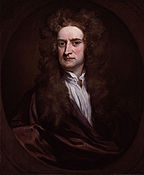
Sir Isaac Newton, as we all know, was a remarkable person. Not only did he write the Philosophiæ Naturalis Principia Mathematica (which nobody I know has read), discover cool stuff like gravity and laws of motion, and, more importantly, invent his famous catflap, but he was also responsible for one of the most intriguing quotes I've ever heard. The story goes like this:

Newton had a dog, presumably a black one. It was called Diamond (for some reason this reminds me of Black Diamond Express). Diamond, irrespective of his whatever his virtues were, overturned a lamp (or a candle, or something equivalent) to set fire to Newton's research papers, which had taken twenty years to accumulate (and that was because they were complicated ones, not because our hero was a slow candidate). Not exactly what you classify under loyalty, but then, that's how sometimes our canine friends can behave like. Newton, the great man that he was, didn't resort to throwing a hawaii chappal (possibly for the lack of one) or utter swear-words (possibly because the choicest of them weren't invented by then, and then, calling the poor creature something like a son-of-a-bitch would probably have been a redundant piece of action). Instead, he uttered, rather Newtonically:
Oh, Diamond! Diamond! thou little knowest what mischief thou hast done!

Rather captivating, his patience and temper management. What struck me was, who was the witness to this? Surely Newton didn't go about bragging to others about his incredible control over temper; and surely Diamond, however prodigal he may have been in finding a legendary master, was linguistically challenged to perform such an activity.

Then who was it? The search for this mysterious entity continues as we possibly come close to squash another urban legend, this time not quite one that I liked to do.

Sunday, March 28, 2010

Gulzar and co.

As a kid I often spent my holidays with my relatives: mostly my maternal grandparents and at my father's sisters. All three houses had a number of people, and the conversations of various sorts had played a serious role in shaping my childhood. The lawn at Kalighat, the walks with my grandfather through Lake Market or Potopara, street cricket at Dover Lane - everything remains incredibly detailed and rich in my memory.

One of my memories involves a large group watching Abhimaan in the TV room at my aunt's. I didn't understand major parts of the classic (partly due to my limited prowess in Hindi, but mostly due to my inability to come to terms with the assortment of adult emotions portrayed in the movie) other than the fact that the tall leading man shouted and brooded through the movie, and his  diminutive wife kept quiet. The other memory that stuck was the fact that all the women present in the hall were weeping, especially during the song at the climax of the movie, that went
Tere mere milan ki ye raina
Naya koi gul khilayegi, tabhi to chanchal hai tere naina
Dekho na, dekho na.

Years passed by; the movie and song both went on to become my favourites. I came to know that the movie was based on the 1954 classic A Star is Born; the song was based on the Rabindrasangeet যদি তারে নাই চিনি গো; and despite the fact that both Kishore and Lata were at their melodious best and the leading pair put up sombre expressions while putting their rehearsed lips to the song, the fact remained that the lyrics (at least the first two lines, if not the entire song) were entirely physical.

If you don't believe me, go through the lines again. I don't think Majroohji ever wanted to hide the fact that the man was craving for the night to arrive, and could see a similar sensuous desire in the eyes of his beloved. Neither do I have an objection to the tone of the song. What I don't like is the universal acceptance of the fact that the song is an innocent romantic aphysical one. I wish people listened to lyrics somewhat more carefully.

*** *** ***

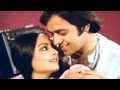
Gulzarji, however, belongs to another level altogether. It wasn't easy to describe the physical desire in a Hindi song without being vulgar. He managed to create magic, as always... portraying a woman's physical longings for her husband and the effects they have on her body, soul and entire existence, her sheer desperation during for those sessions during her long waits for him, and at the same time, manage to sound innocent and lyrical. I wish I could write anywhere remotely close to this:
Jab bhi khayaalon mein tu aaye,
Mere badan se khushboo aaye,
Mehke badan mein rahaa naa jaaye
Rahaa jaaye na.

And then,
Reshmi raaten roz na hogi,
Ye saugaaten roz na hogi,
Zindagi tujh bin raas na aaye,
Raas aaye na.

If that isn't brilliant, I don't know what is. Possibly just another proof that you need not display flesh on screen to enhance sexuality. And then, you can't deny Rekha's screen appearance which simply took the masterpiece to the next level.

Followers